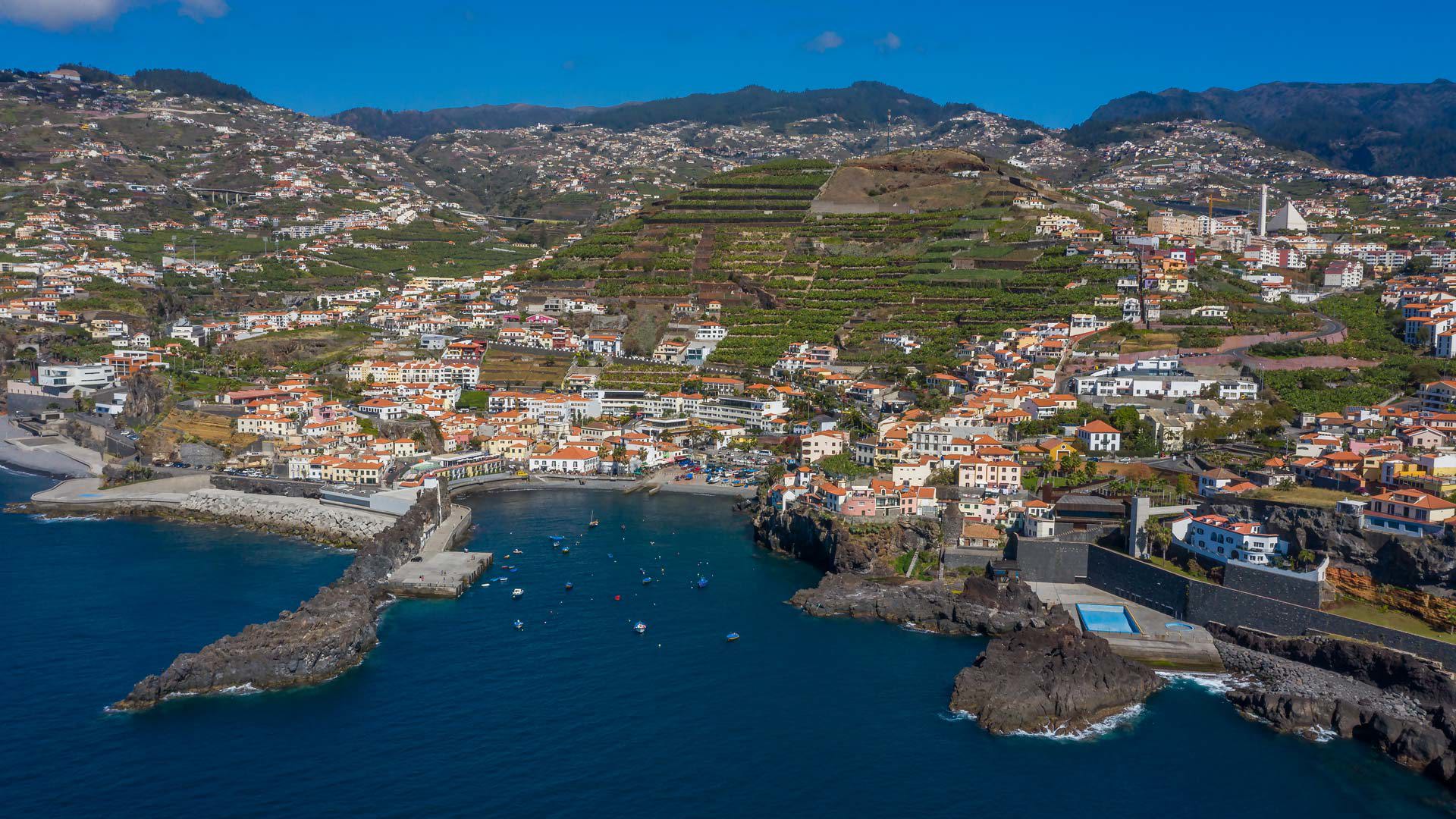
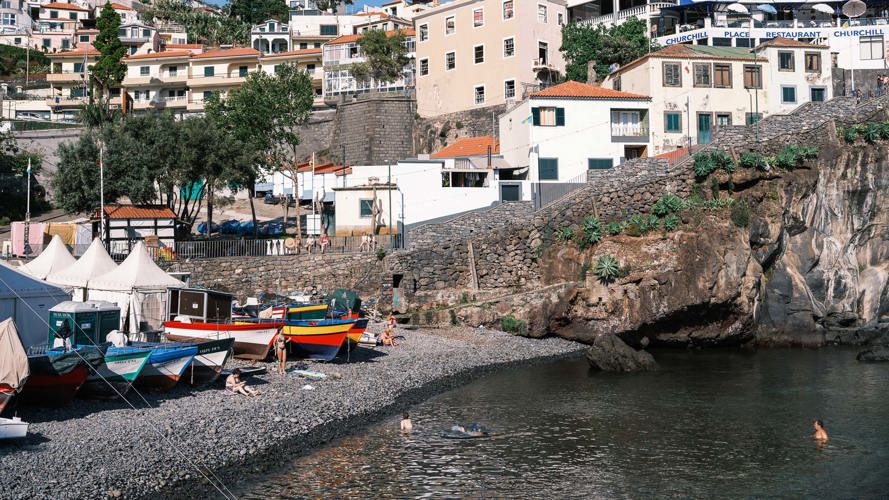
Arriving in Câmara de Lobos on a warm, sunlit summer afternoon feels like stepping into a postcard that is very much alive. The light in the final days of June has a golden, generous quality, illuminating the amphitheatre of steep green hills that cradle the bay. Fishing boats painted in bright primary colors rest on the calm water, gently rocking in rhythm with the Atlantic. On the surface, it is picture-perfect. But beneath beauty lie movement, anticipation, and an unmistakable sense of community.
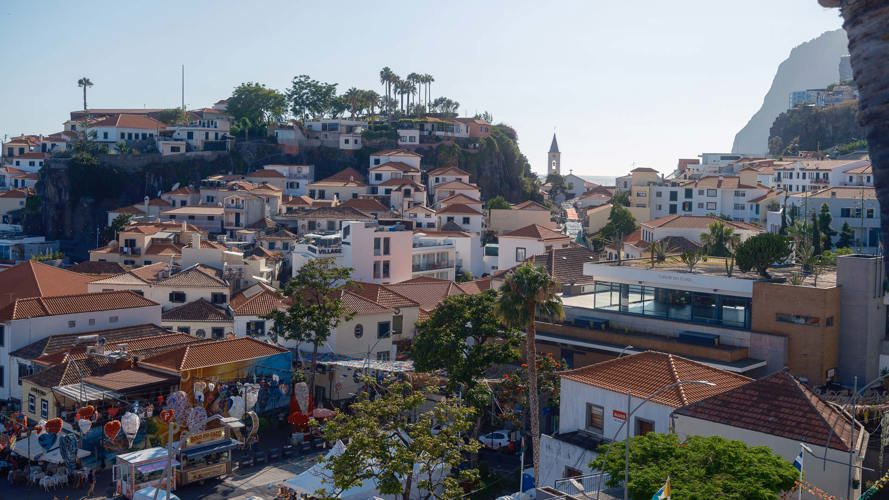
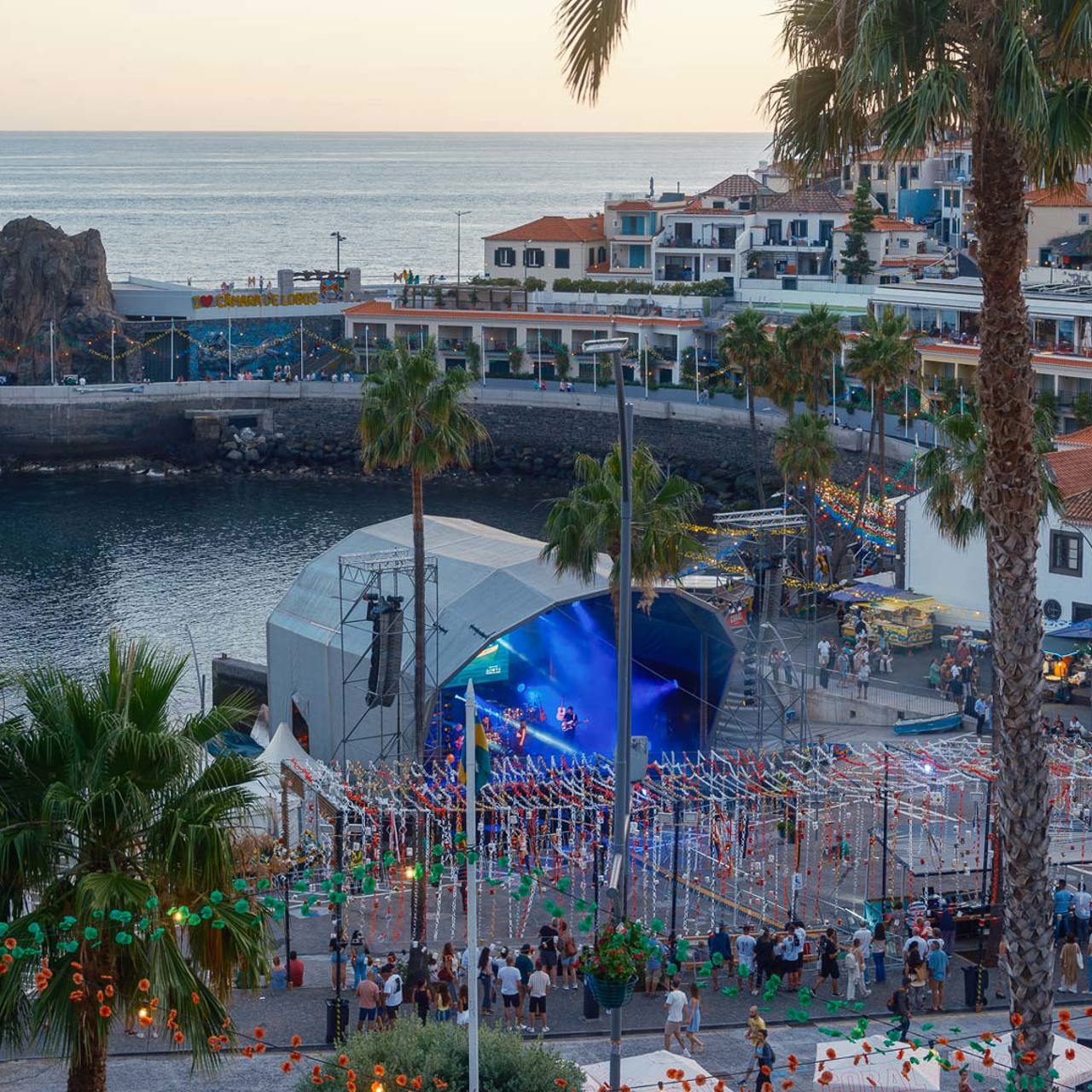
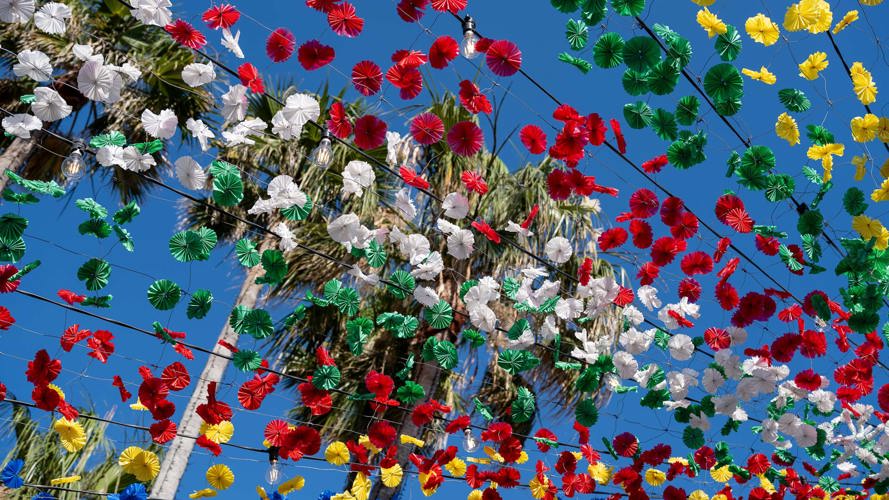
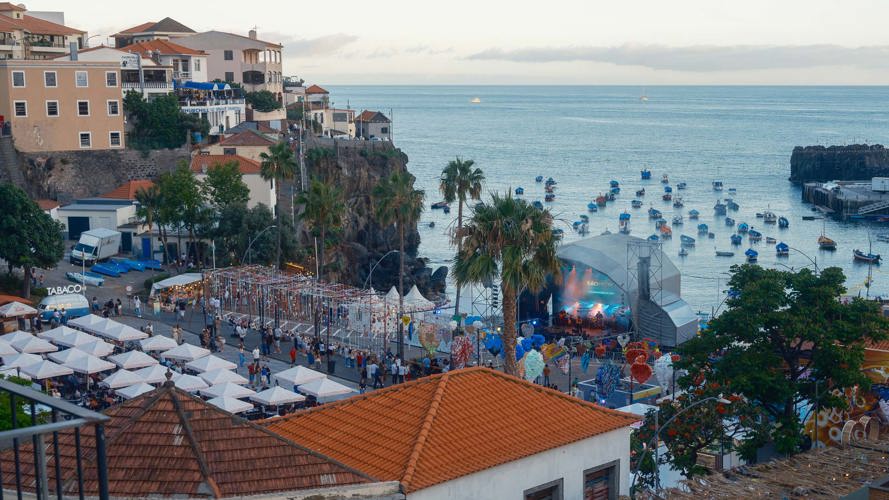
We reached the bay just a few hours before the Arraial de São Pedro was due to begin. Even before the official programme got underway, the town was already buzzing. Strings of colorful decorations hung above the narrow streets, fluttering lightly in the breeze. Stalls were being assembled, tables arranged, sound systems tested. Locals moved with purpose, greeting one another as they passed, stopping to exchange news. There was a quiet understanding that this was not just another summer evening – it was one of the most meaningful dates in the local calendar.
Câmara de Lobos is often described as one of Madeira’s most traditional fishing villages, and that identity is immediately visible. The harbour remains the heart of the town, not as a nostalgic backdrop but as a working space. The boats are not decorative props; they are tools of daily life. Nets, ropes and crates speak of early mornings at sea. This authenticity gives the Arraial de São Pedro a particular depth. Saint Peter is the patron saint of fishermen, and in coastal communities like this one, the celebration carries genuine emotional and spiritual weight.
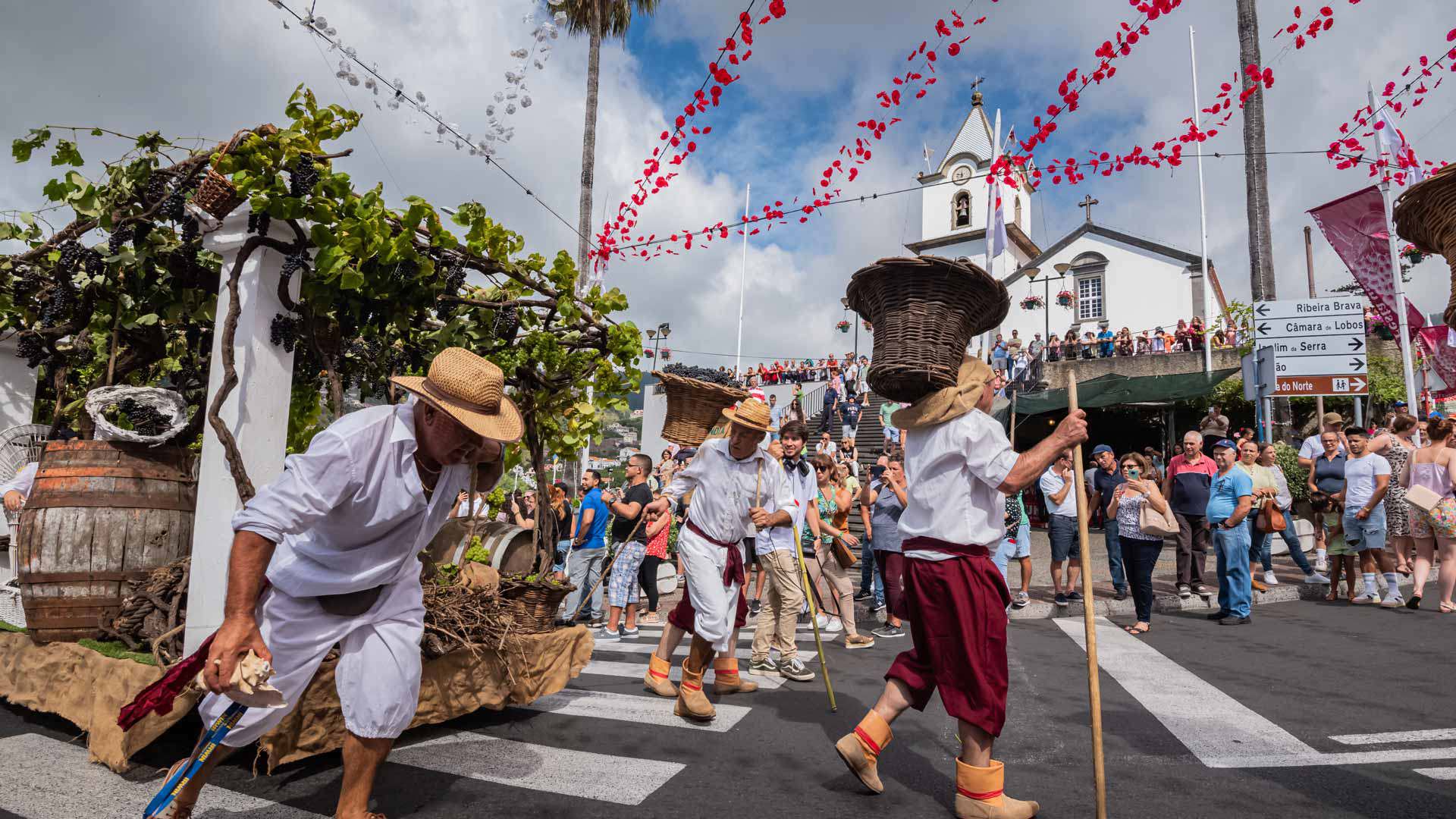
Madeira’s traditional festivals – known locally as “arraiais” – are far more than entertainment. They are layered expressions of faith, gratitude and continuity. Throughout the summer months, especially from June onwards, these festivities take place across the island with remarkable frequency. In fact, during the same weekend, several other parishes were also holding their own celebrations, each with its distinct character but sharing the same foundations: devotion, music, food and togetherness. This rhythm of communal gatherings defines summer in Madeira.
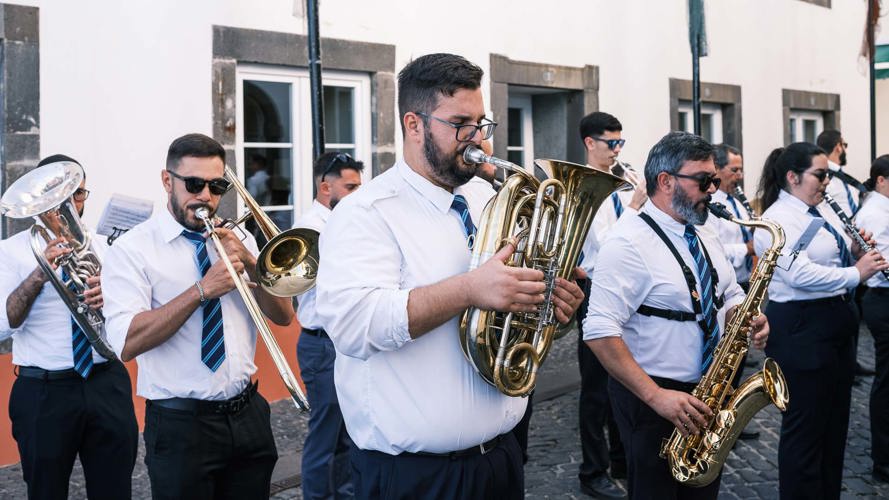
As we wandered through the streets in the late afternoon, a local philharmonic band was already playing, filling the air with brass and percussion. The music echoed between the whitewashed buildings and drifted down towards the sea. Children ran ahead of their parents, drawn by the sound. Elderly residents watched from doorways and balconies, smiling at the familiar melodies. Visitors, like us, were effortlessly absorbed into the atmosphere. There was nothing staged about it; it felt organic, generous and inclusive.
One of the most striking aspects of Madeira’s traditional festivals is how closely they are tied to food. These celebrations are moments when communities come together not only to honor saints but also to eat and drink. The aromas begin to build hours before nightfall — grilled meat and fish sizzling over open flames, bolo do caco, poncha and sweet treats prepared for later in the evening. Food here is not secondary to the event; it is central to the experience.
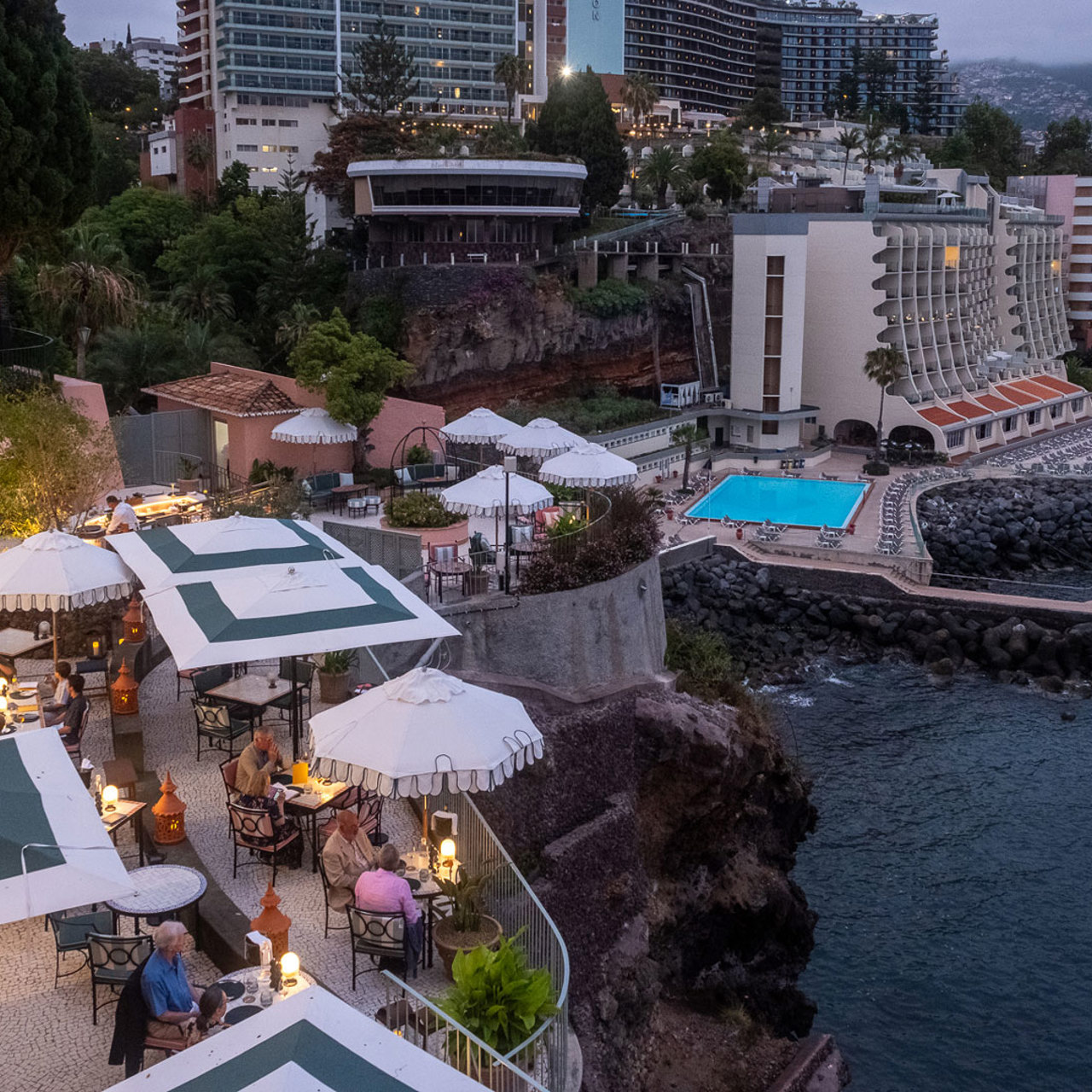
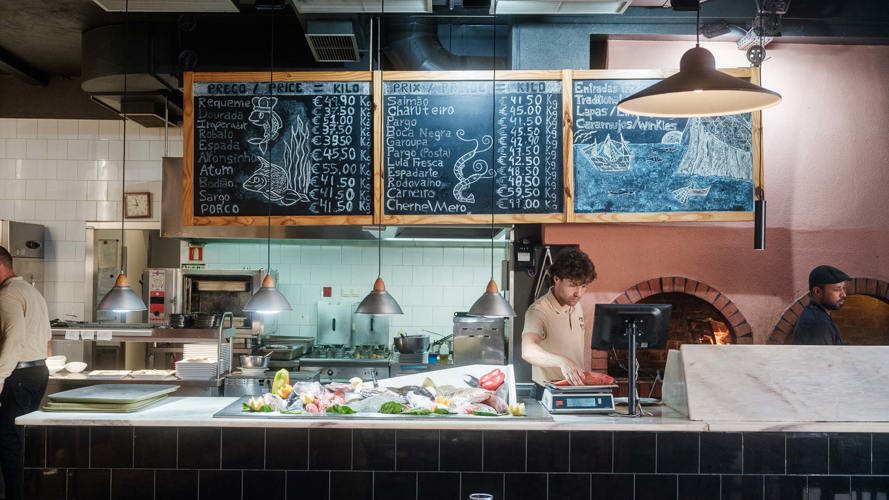
As the sun began to dip behind the hills, casting long shadows across the bay, we made our way to dinner at Vila do Peixe, a sea-view restaurant overlooking the harbour. Perfectly positioned above the waterfront, it offered an uninterrupted view of the festivities below. From our table, we could see the first strings of lights flicker on across the town, reflecting softly on the water. The sound of music grew louder, blending with the hum of conversation rising from the streets.
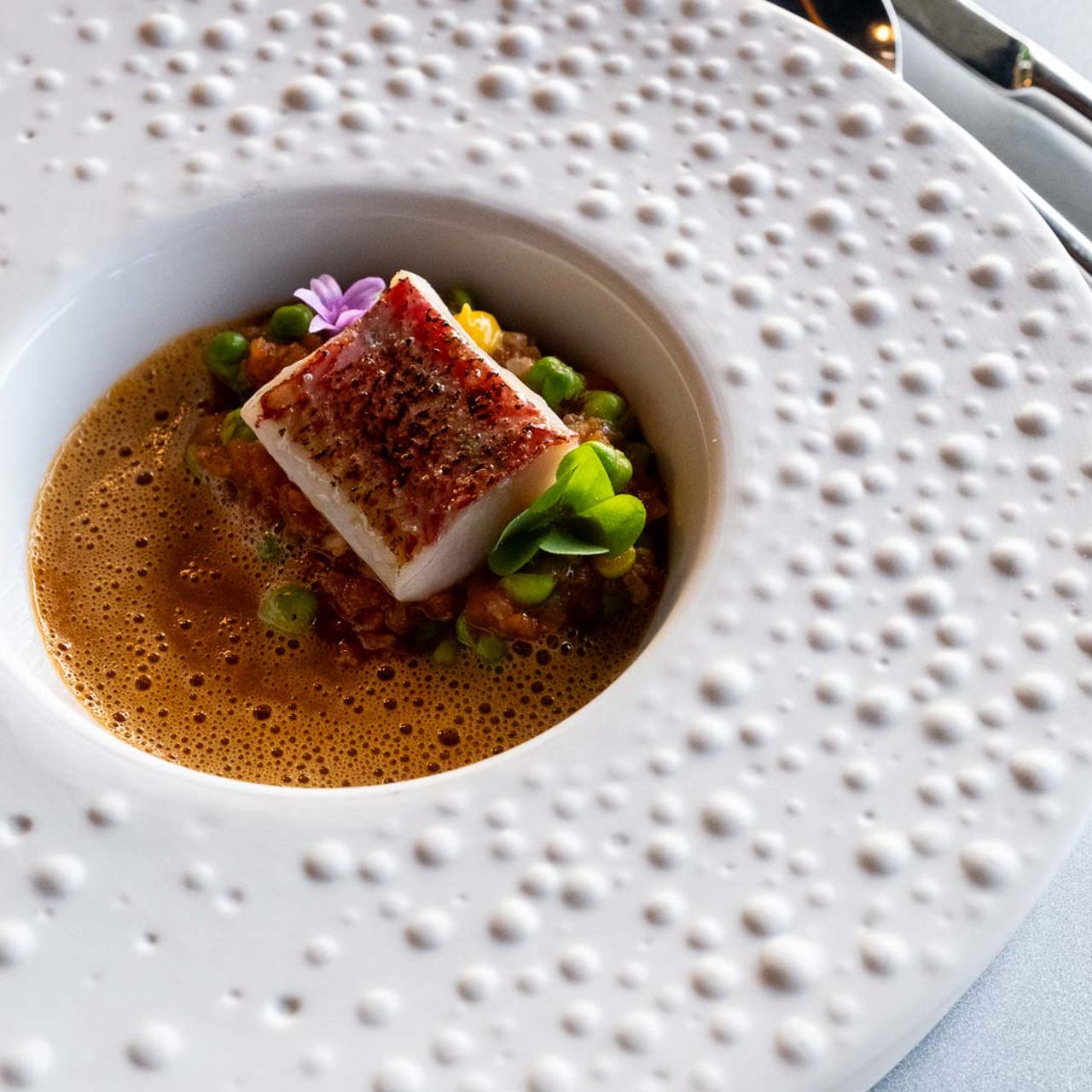
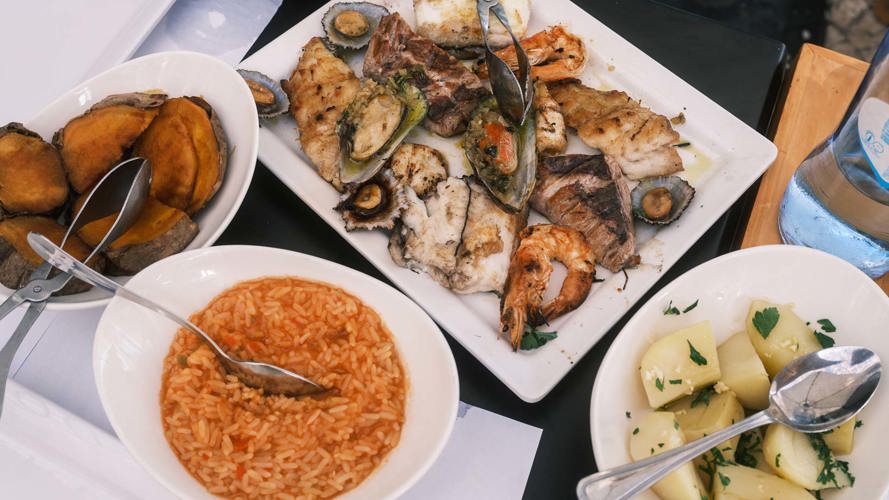
Dinner felt like an extension of the celebration. A generous platter of local seafood arrived at the table — a vibrant display of the Atlantic’s bounty. Fresh fish, simply prepared, allowed the quality of the ingredients to speak for themselves. There is something particularly meaningful about eating seafood while looking directly at the boats that brought it ashore. It reinforces the connection between land, sea and table that defines Câmara de Lobos.
As darkness settled, the atmosphere intensified. The streets filled steadily, yet the town never felt overwhelmed. Instead, there was a sense of collective ownership. Families gathered around long tables. Friends greeted one another with warm embraces. Laughter, music and the distant rhythm of waves merged into a layered soundtrack that felt both joyful and grounded. The Arraial de São Pedro was in full swing.
At its core, the festival is a reminder of how deeply fishing culture has shaped this community. Historically, livelihoods here depended entirely on the sea – on weather patterns, seasonal cycles and the skill of those who navigated the waters before dawn. While modern life has brought change and diversification, the connection remains visible and respected.
Being in Câmara de Lobos during the Arraial de São Pedro revealed a dimension that goes beyond its scenic reputation. Yes, it is undeniably beautiful – the curved bay, the terraced hillsides, the vivid boats against blue water. But the true character of the town emerges through its people and their traditions. Festivals like this are not performances for visitors; they are lived experiences in which visitors are warmly invited to participate.
As the evening unfolded and the music continued under the summer sky, it became clear that this was the essence of Madeira’s traditional festivals. They are rooted in place, shaped by history and sustained by community. Experiencing one firsthand, in one of the island’s most emblematic fishing towns, offered a deeper understanding of Madeira itself – not only as a destination of landscapes, but as a living culture defined by resilience, faith and celebration.
I left Câmara de Lobos that night with the lingering sound of music in my ears and the glow of festival lights reflected in the bay. More than a picturesque stop, it had revealed itself as a place where tradition is not preserved behind glass, but actively lived – especially on a summer evening when the island comes together to celebrate.