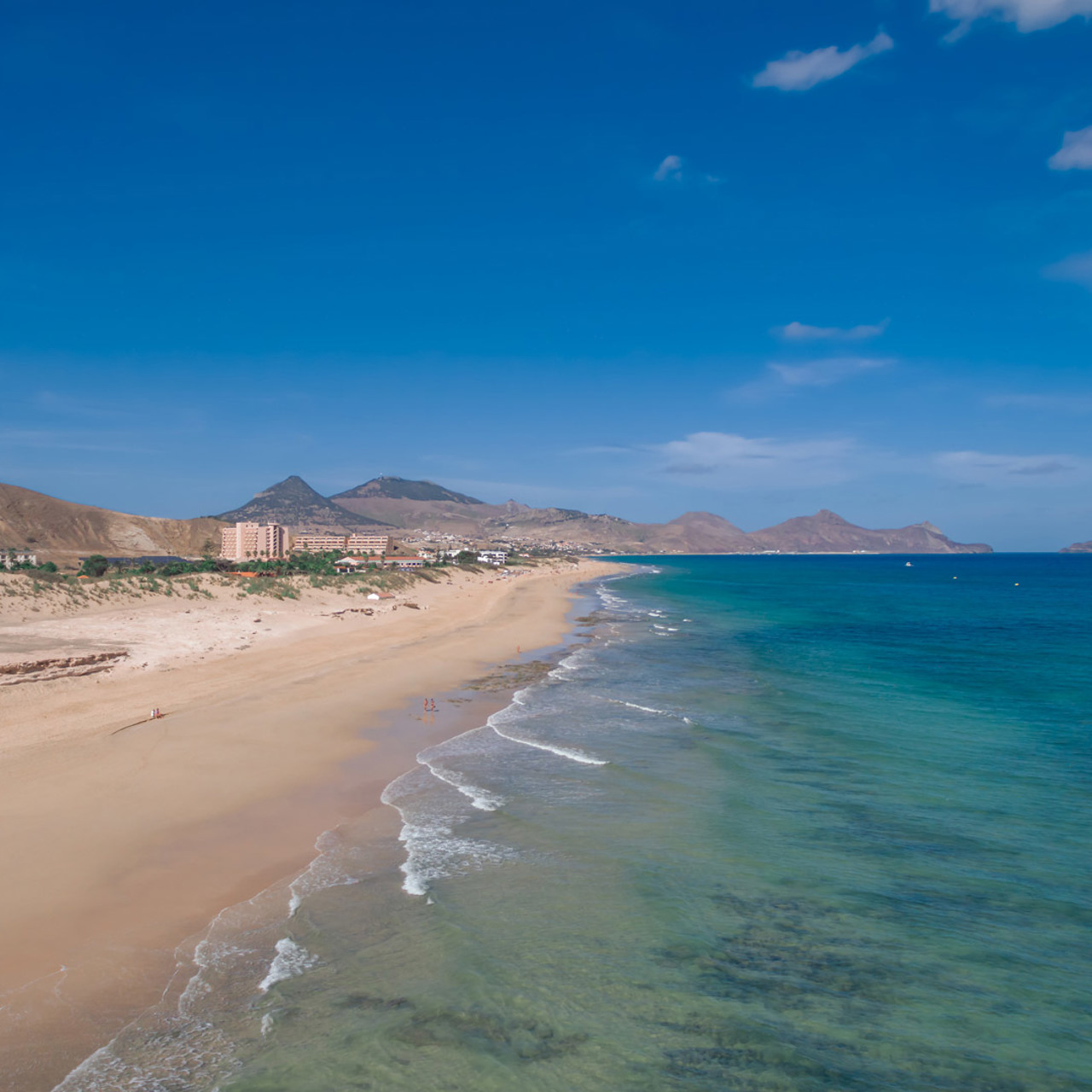
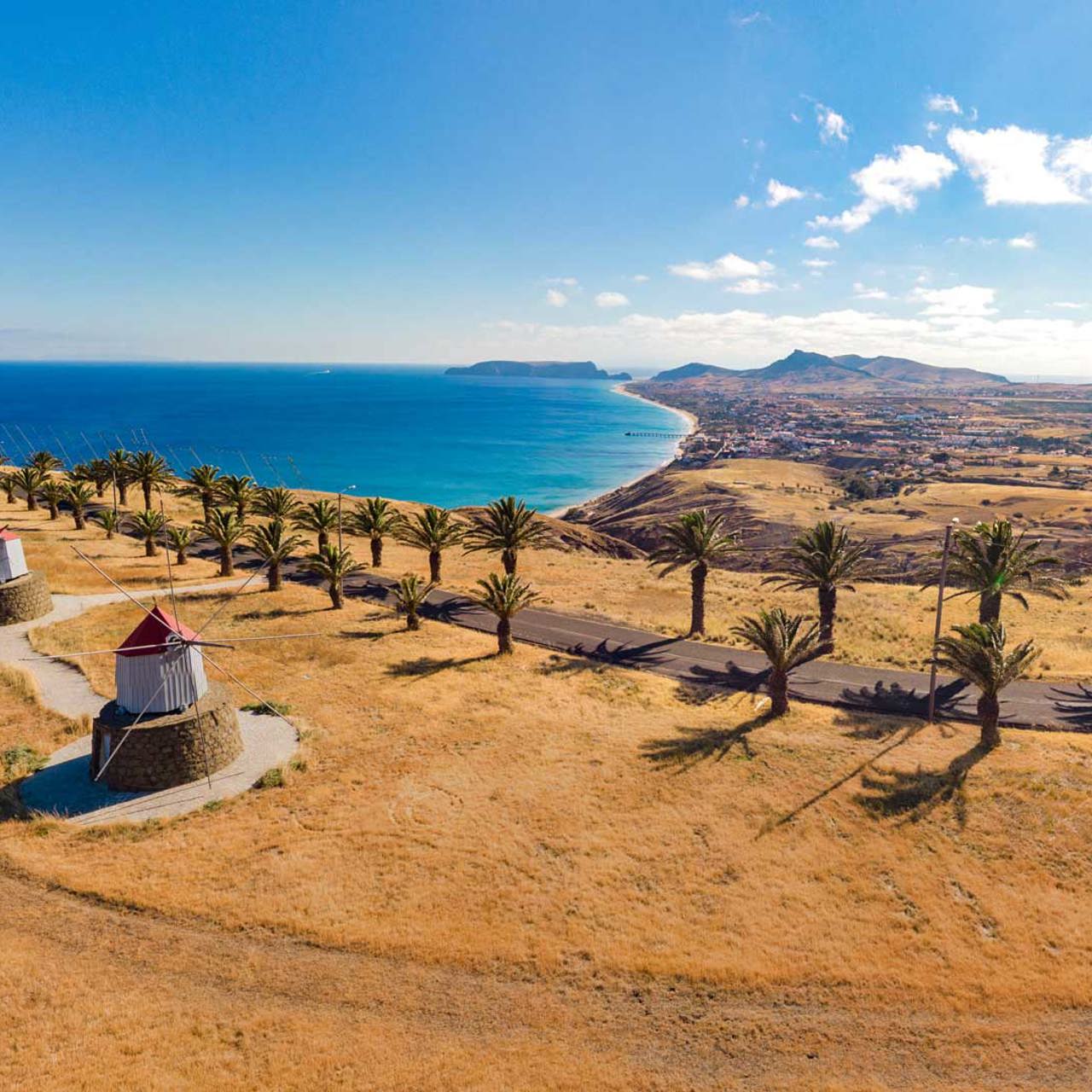
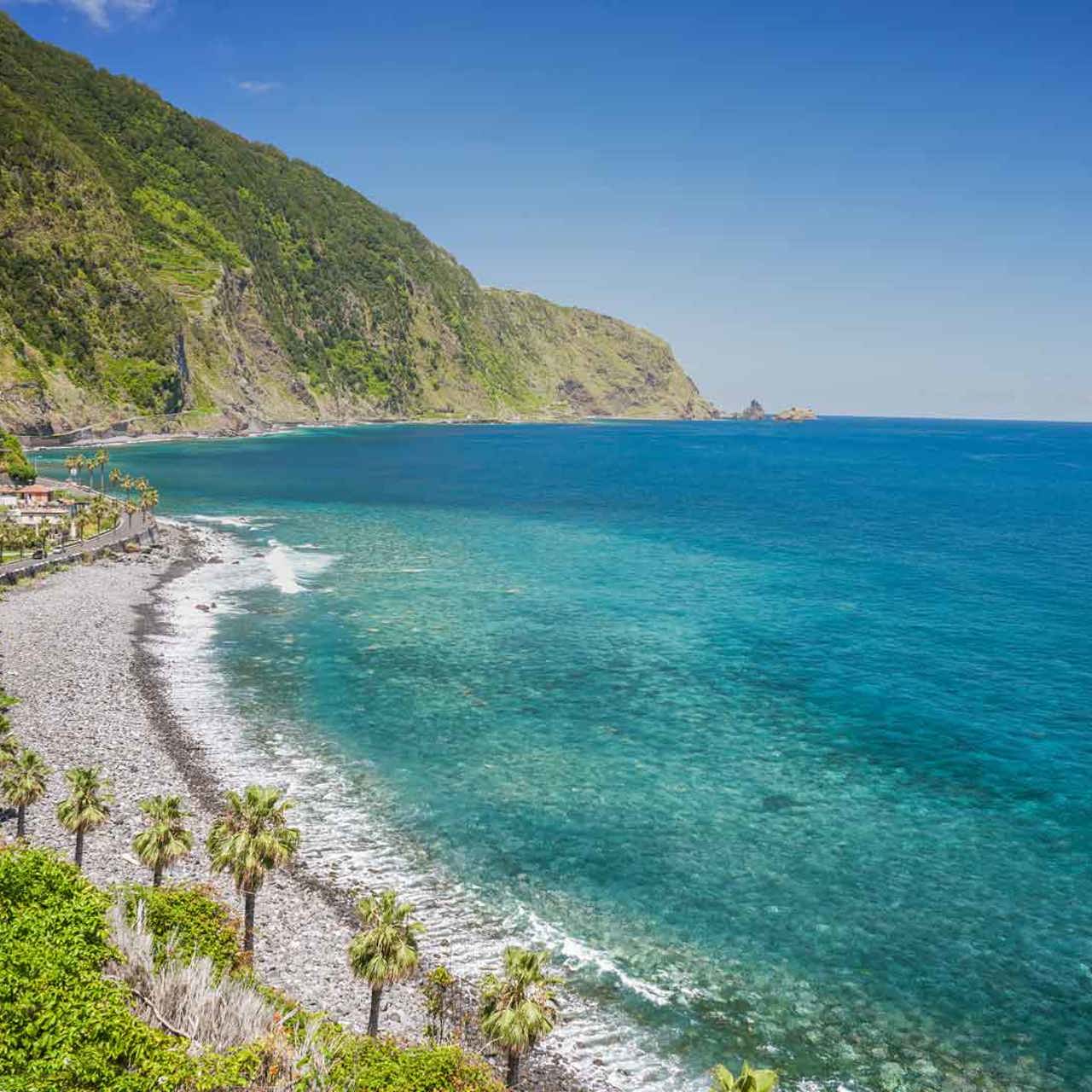
When people think of Porto Santo, they naturally picture its long golden beach and the blue sea that stretches along the coast. But step away from the sand for a moment and you will find an island with many more stories to tell. They live in the stone walls that protect the vineyards, an iconic recipe born on the island, the traces left by Christopher Columbus and the rock formations that reveal its volcanic origins. Some of these details are there for everyone to see. Others come to light when you explore the island at a slower pace and look a little closer.
Join us as we discover seven things you may not know about Porto Santo.
1. The sand of Porto Santo is also used in wellness treatments
The beach is one of Porto Santo’s best-known attractions, but its fine golden sand has a distinctive quality: it can retain heat and release minerals when it comes into contact with perspiration. For this reason, Porto Santo sand is considered therapeutic and is used in psammotherapy treatments for rheumatic, orthopaedic and inflammatory conditions.
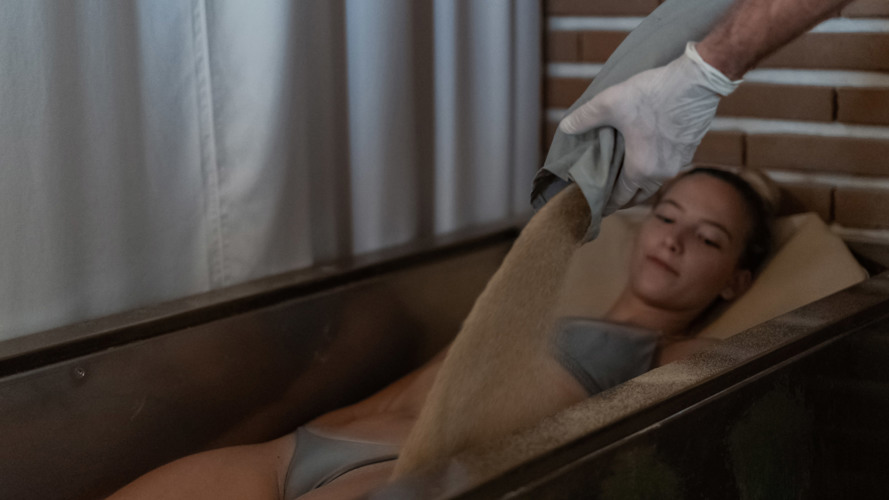
Its biogenic composition is linked to the natural history of the archipelago. Many of its grains come from fragments of shells and calcareous algae, traces of marine life that once existed in the region. Along the beach, the scenery that now invites leisurely walks also holds a geological memory of the seabed. And wellness here is not limited to treatments. A barefoot stroll by the water, a pause to take in the horizon or a day spent between the sand and the sea can be the perfect antidote to everyday stress.
2. The vineyards grow close to the ground, protected by “crochet” walls
As we leave the coast and head inland, we come across features that tell another story of Porto Santo: its vineyards and the small stone walls around them.
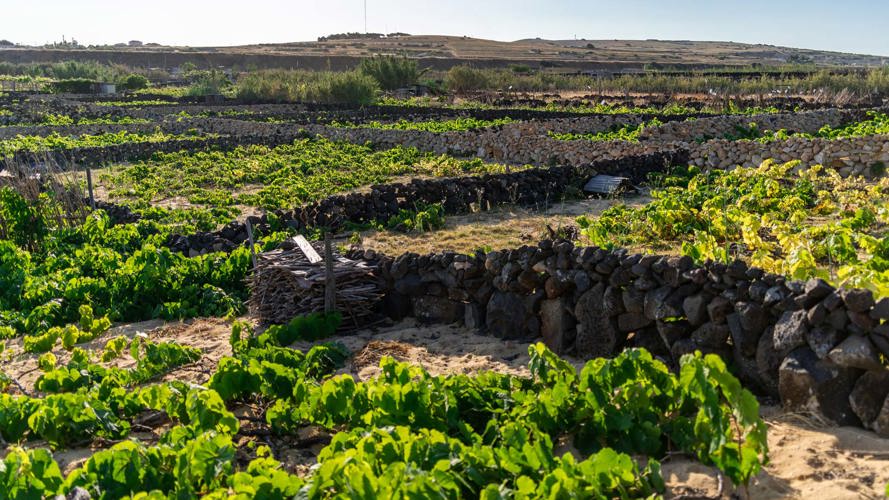
The island’s traditional viticulture has adapted to challenging conditions, including exposure to the wind. The vines are therefore trained close to the ground and protected by low walls of dry-stacked stone, locally known as muros de croché. Built without mortar, these structures shelter the plants and create more favourable conditions for them to grow. They also help hold the sand in place in dune areas. These walls are more than an agricultural solution. They are part of the landscape and show how, over time, local people found ways to work the land while respecting the island’s natural features.
3. Bolo do caco was born in Porto Santo
Today, bolo do caco is known throughout the Madeira archipelago. But its origins lie in Porto Santo.
The recipe is thought to have started as a way of using leftover bread dough. Instead of baking it in an oven, the dough was placed on a heated slab of basalt called a caco. That is where this traditional flatbread gets its name. The Madeiran recipe we know today includes sweet potato, which gives it a soft texture.
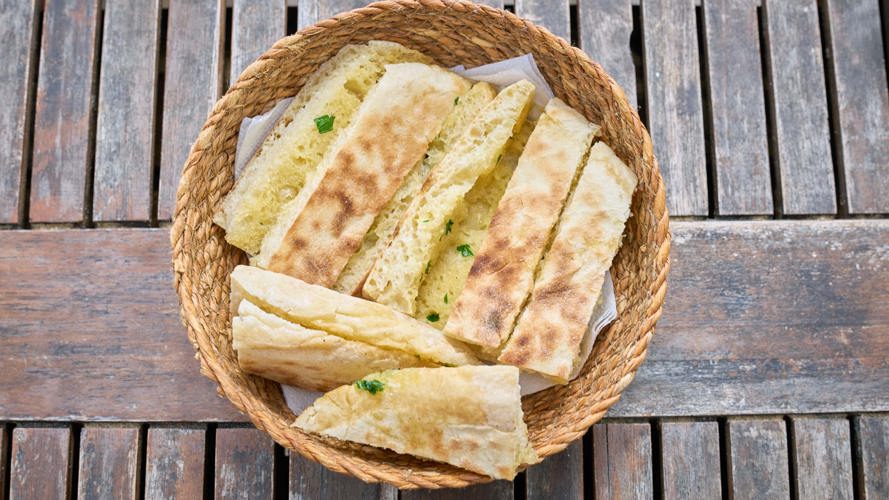
Served hot, often with garlic and parsley butter, bolo do caco has become a familiar sight at the table. It can accompany a meal or be enjoyed on its own as a snack. Trying a slice in Porto Santo is also a way to discover a piece of the island’s food history. And some people will tell you that bolo do caco tastes extra special here.
4. Porto Santo is a UNESCO Biosphere Reserve
In 2020, the island of Porto Santo and the surrounding islets were recognised as a UNESCO Biosphere Reserve. The designation celebrates Porto Santo’s natural wealth and the relationship between its ecosystems, local community and human activities.
The Reserve covers terrestrial, coastal and marine environments. It therefore includes much more than the best-known beach: the islets, dune areas, rocky landscapes and habitats that support the island’s biodiversity are all part of this heritage.
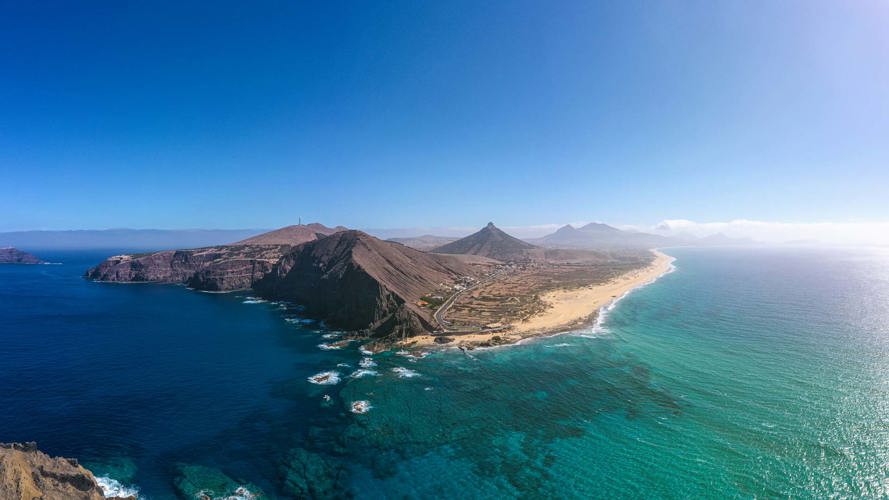
UNESCO recognition draws attention to an important balance: conserving nature while also valuing local culture and supporting the sustainable development of the community. For visitors, it is an invitation to discover the island beyond its most photographed spots and explore the variety of landscapes found in a relatively small area.
5. Christopher Columbus may have lived in Porto Santo
Porto Santo’s history is intertwined with that of Christopher Columbus. After marrying Filipa Moniz, daughter of Bartolomeu Perestrelo, the island’s first captain-donee, the navigator is believed to have lived in the building that now houses Casa Colombo – Porto Santo Museum..
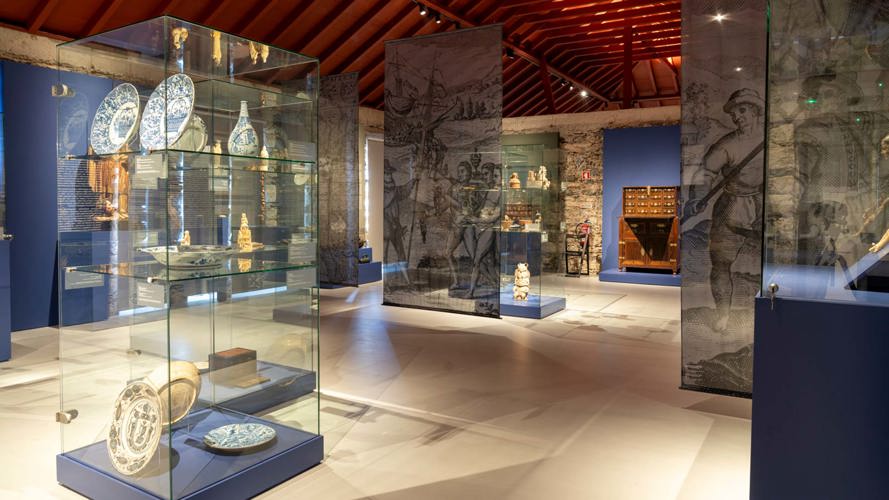
A visit to the museum offers a closer look at this connection and the context of Portuguese and Spanish maritime expansion. To evoke Columbus’s time on the island, the Colombo Festival is held every September. Concerts, performances and a 16th-century market recreate the atmosphere of the Age of Discoveries and invite residents and visitors to travel back in time.
6. The golf course was designed by Severiano Ballesteros
Porto Santo Golf Club was designed by Spanish golfer Severiano Ballesteros and opened in October 2004. The 18-hole course crosses the island, offering views of both its northern and southern coasts.
The course combines two distinct settings. In the south, lakes are part of a layout that calls for long, precise shots. To the north, it follows basalt cliffs and brings players close to one of the island’s most striking geological features: its volcanic rock formations.
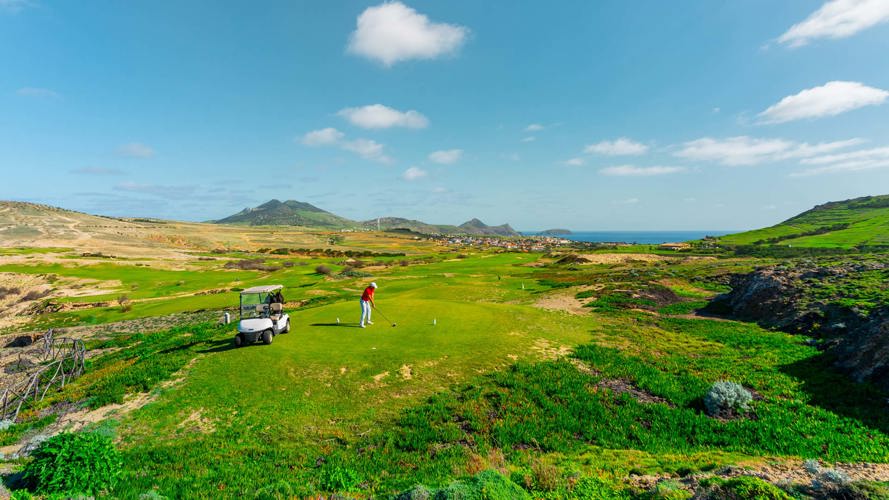
A round of golf is therefore also a different way to get to know Porto Santo. Between shots, the scenery changes, revealing the sea, the rocks and the island’s peaceful character.
7. Peaks steeped in fortresses and legends
Two of the most striking places in Porto Santo’s interior are Pico do Castelo and Pico de Ana Ferreira. Each offers distinctive views and geological formations, and each has a story of its own.
At 437 metres above sea level, the Pico do Castelo viewpoint offers sweeping views across the island, the bay and some of the surrounding islets. At the summit are the remains of a small 16th-century fortress, built to protect the population from frequent raids by French pirates. Some of the cannons can still be seen there today.
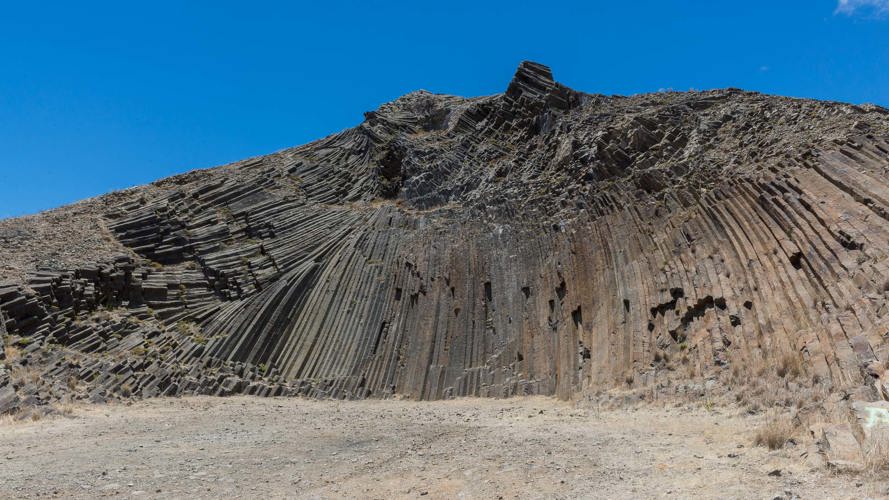
Já o Pico de Ana Ferreira, at 283 metres, is known for its prismatic columns, popularly called “piano” although they resemble the pipes of an organ. These formations were created by volcanic activity and the slow cooling of magma thousands of years ago.
The peak’s name is linked to a local legend. According to tradition, the cave in the area served as a hideaway for the illegitimate daughter of King João II, who is said to have lived there away from the public eye and safe from pirate attacks. She was also said to possess hidden powers that revealed themselves from the cave. This story belongs to local folklore, but it adds a legendary dimension to a landscape already shaped by geology and history.
An island that reveals itself little by little
The beach may be the first reason to visit Porto Santo, but it need not be the only one. Between the sea and the island’s interior, tradition and nature, there is so much to discover. Sometimes all it takes is to leave the beach behind and follow a different path.